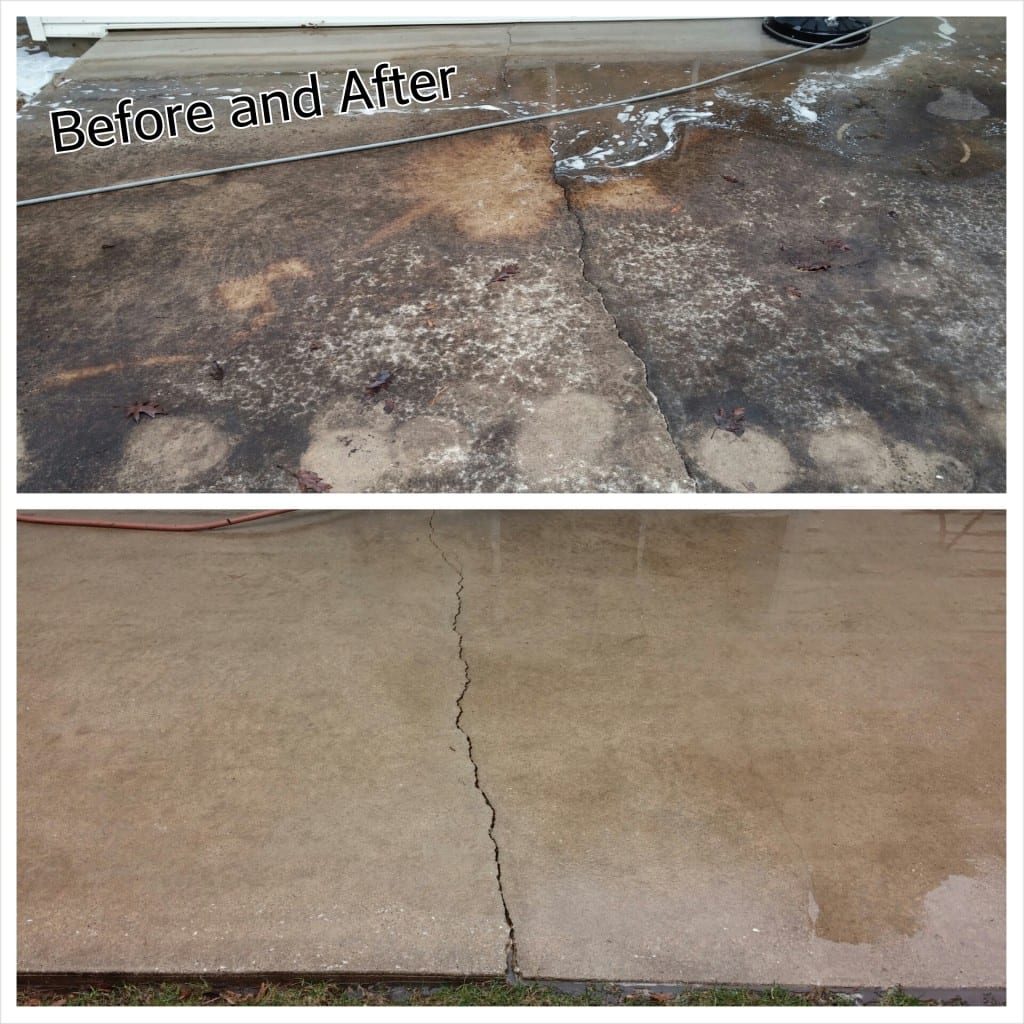
In 2026, most homeowners pay about $0.20 to $0.55 per square foot, with many driveway jobs falling near $100 to $500. Residential concrete cleaning removes dirt, algae, oil, and mildew from driveways, patios, and walkways, helping prevent slips and surface wear.
Concrete around your home takes a beating. Cars leave behind oil and grease, foot traffic grinds in dirt, and wet weather helps algae and mildew spread faster than most homeowners realize. For homeowners in Maryland, Delaware, and Pennsylvania, regular concrete cleaning is one of the simplest ways to keep outdoor areas safer and better-looking year-round.
Why concrete gets dirty so quickly
Concrete may look tough, but it is still porous. That means it can absorb moisture, grime, oil residue, and organic matter. Once that buildup settles in, a simple rinse with a garden hose usually does very little. Driveways and walkways are hit the hardest because they deal with daily traffic, tire marks, rain runoff, leaves, and shade. In humid areas, especially around parts of Harford County, Baltimore County, Cecil County, and nearby service areas, algae and mildew can grow fast on concrete that stays damp. That is often when homeowners notice dark streaks, green patches, or slick areas that feel risky underfoot.
What residential concrete cleaning actually removes
A professional concrete cleaning service is meant to handle more than loose surface dirt. It targets the stuff that makes concrete look old and unsafe before it really is. Common problems include oil spots, grease, rust marks, mildew, algae, mold, tire residue, food spills, and general blackened grime. On patios, you may also see pollen, soil stains, and organic buildup from nearby landscaping. On walkways, the issue is usually slippery film and discoloration from moisture. When this material stays in place too long, the problem becomes more than cosmetic. The surface can stay damp longer, hold more debris, and become harder to clean later.
Increase curb appeal and safety at the same time
A stained driveway can pull down the look of the whole property. Even if your lawn is trimmed and your siding looks good, dirty concrete often makes the home feel less cared for. Clean concrete sharpens the whole front-of-house look almost right away. Safety matters just as much. Mold, algae, and mildew can create slick spots that raise the chance of slips and falls. That risk is easy to ignore until someone nearly loses their footing after rain or early morning moisture. Professional residential concrete cleaning helps remove that slippery layer so your driveway, patio, poolside path, and walkways are easier and safer to use.
How dirty concrete can lead to damage
A lot of homeowners wait until concrete looks really bad before they act. The trouble is, by that point, the surface may already be dealing with slow wear. Contaminants, trapped moisture, and acidic spills can eat away at the surface over time. Small chips and hairline cracks can start to grow when grime settles in and moisture keeps cycling through the concrete. Cleaning does not repair existing damage, but it can help slow down the conditions that often make it worse. In simple terms, regular cleaning is cheaper than letting the surface age faster and paying for repairs sooner.
How much does residential concrete cleaning cost in 2026?
Pricing depends on the size of the area, the condition of the concrete, how easy it is to access, and whether stains need extra treatment. In 2026, professional driveway pressure washing commonly runs about $0.30 to $0.55 per square foot, while patio pressure washing often falls around $0.10 to $0.50 per square foot. Many driveway jobs land near $100 to $500, and many patio jobs fall around $100 to $400.
Here is a simple cost guide you can use as a starting point:
| Concrete Area | Typical 2026 Price Range | Best For |
| Small walkway | $75–$150 | Light dirt and seasonal cleanup |
| Standard driveway | $100–$500 | Tire marks, mildew, and general grime |
| Patio or pool deck | $100–$400 | Dirt, algae, food stains, and weathering |
| Driveway + walkway bundle | $200–$650 | Better overall curb appeal and value |
These are broad market ranges, not fixed quotes. Heavier oil stains, rust, deep organic growth, or very large areas may push pricing higher.
Signs it is time to clean your concrete
Most homeowners can spot the need once they know what to look for. The obvious sign is dark staining, but that is not the only clue.
If your driveway looks uneven in color, feels slick when wet, shows green or black buildup, or has visible oil spots that never seem to fade, it is probably time. The same goes for patios that look dull, dirty around furniture edges, or stained after leaf season. Even if the buildup seems minor, early cleaning is usually easier and more affordable than waiting until stains settle in deeper.
Why professional concrete cleaning works better than DIY
DIY cleaning sounds simple at first, but concrete is easy to clean the wrong way. Too much pressure can leave lines, etching, or visible streaks across the surface. Too little pressure does not remove buildup well enough. Store-bought cleaners can also fail on oil, algae, and deep grime.
A professional crew knows how to match the method to the surface condition. That includes using the right pressure, the right cleaning solution, and the right equipment for even results. The goal is not just blasting the surface. It is cleaning it thoroughly without leaving the concrete looking patchy or damaged.
What homeowners often get wrong
One of the biggest mistakes is waiting too long. Fresh buildup is much easier to remove than old staining that has sat through heat, rain, and repeated foot traffic. Another common mistake is thinking concrete only needs attention when guests are coming over.
The smarter approach is maintenance before the surface becomes a problem. If you clean concrete on a sensible schedule, you usually get better-looking results, safer walking areas, and less long-term surface wear. That matters for busy homes, rental properties, and anyone trying to keep a property looking clean in places like Anne Arundel County, Howard County, Carroll County, New Castle County, Delaware County, or Chester County.
How often should residential concrete be cleaned?
For many homes, once a year is a good baseline. That helps remove normal buildup before it gets out of hand. Homes with more shade, more moisture, more trees, or heavier traffic may need service more often.
Driveways with regular vehicle use and patios near landscaping usually show dirt faster. If algae or mildew grows quickly on your property, a yearly clean may not be enough. In those cases, a more regular schedule can help keep surfaces cleaner and safer without letting buildup settle in too deeply.
Why homeowners choose Maryland Pro Wash for concrete cleaning
Maryland Pro Wash provides residential concrete cleaning for homeowners who want cleaner, safer outdoor surfaces without guessing at the right method. The company serves properties across Maryland, Delaware, and Pennsylvania, including areas such as Harford County, Baltimore County, Cecil County, Anne Arundel County, Howard County, Carroll County, New Castle County, Delaware County, and Chester County. Their team uses professional equipment and surface-safe cleaning methods to remove grime, mold, mildew, algae, and stains from driveways, walkways, patios, and other hard surfaces. With licensed and insured service, free estimates, and a strong local reputation, Maryland Pro Wash gives homeowners a practical way to protect curb appeal and keep concrete areas looking their best.
Get Residential Concrete Cleaning Services in Maryland
Clean concrete looks better, feels safer, and helps stop grime, algae, and stains from building up on your driveway, patio, and walkways.
Get a QuoteFAQs
In 2026, many homeowners pay about $0.20 to $0.55 per square foot depending on the area and condition. A standard driveway often costs around $100 to $500, while patios and walkways may cost less or more based on size and staining.
Yes, especially when algae, mold, or mildew starts forming on the surface. That buildup can make concrete slippery after rain, shade, or morning moisture. Cleaning removes that layer and helps reduce the chance of slips around driveways, walkways, patios, and entry paths.
It can if the wrong pressure or poor technique is used. Uneven cleaning, surface lines, and etching are common DIY problems. Professional cleaning is safer because the equipment and settings are matched to the surface condition instead of using one approach for everything.
For many homes, once a year works well. If your property gets a lot of shade, tree debris, moisture, or traffic, you may need more frequent cleaning. The best timing depends on how quickly grime, algae, and staining return after each service.
Many stains improve a lot, but results depend on how old and deep the staining is. Fresh oil spots and surface grime usually come up better than stains that have soaked in for a long time. Early treatment usually gives the best result.